

Western Cyprus' open-air museum — Roman mosaics, rock-cut royal tombs and a harbour castle, all wrapped in the myth of Aphrodite.
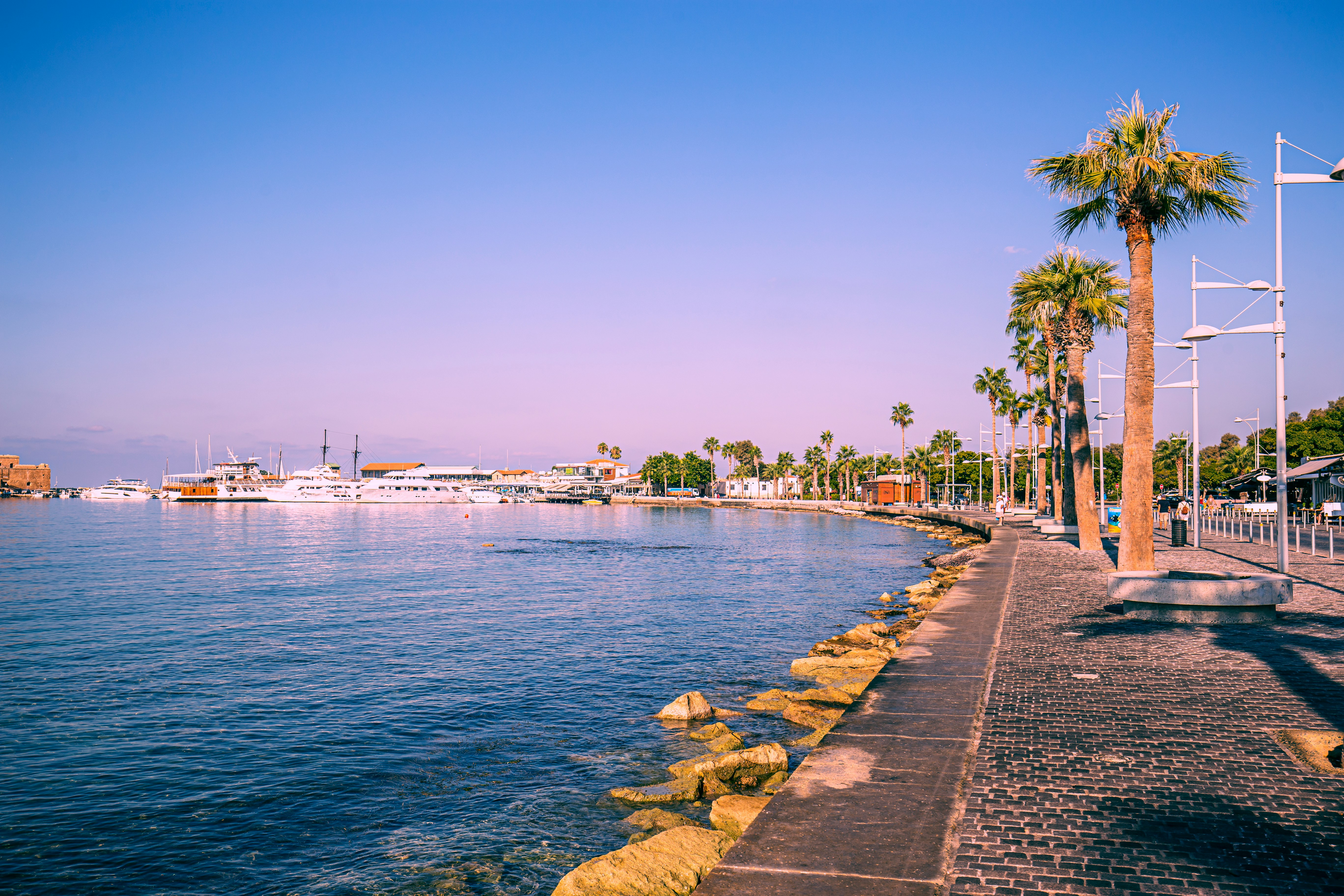
Paphos has been sacred ground since antiquity. Nearby Palaepaphos was the great sanctuary of Aphrodite, the goddess Greek myth says was born on this coast, and pilgrims came from across the ancient world. Under Rome, Paphos became the capital of the island.
That golden age left behind some of the finest Roman floor mosaics in the Mediterranean, buried for centuries until farmers uncovered them in the 20th century. The entire town and its monuments were inscribed on the UNESCO World Heritage List for their archaeological value.
Modern Paphos splits in two: Kato Paphos by the sea, with the archaeological park and lively harbour, and the older upper town of Ktima with its market and museums. In 2017 it served as a European Capital of Culture.
The House of Dionysos and other Roman villas preserve intricate mythological mosaics — the star attraction of the town.
A medieval fort guards a photogenic harbour lined with cafés and fishing boats — the heart of seaside Paphos.
A vast necropolis of monumental rock-cut tombs just north of town (covered in its own guide).
An early Christian basilica complex where, by tradition, the Apostle Paul was flogged before converting the Roman governor.
A long promenade linking beaches, the harbour and the park — easy and walkable.
Paphos is the springboard for the Akamas peninsula, the Blue Lagoon and Aphrodite's Rock.
Spring and autumn for comfortable sightseeing; the coast stays mild well into the off-season.
A full day for the park, harbour and tombs; two days to add the Akamas and Aphrodite sites.
The Archaeological Park and Tombs of the Kings have separate entry fees; combined heritage passes are sometimes available.
Paphos is about 50 minutes from Limassol; its sights are spread out, so a car or taxi helps.
About 50 minutes (≈ 65 km) west of Limassol along the motorway.
Paphos rewards a planned day — the mosaics, the harbour and the Tombs of the Kings sit apart from one another. We drive you between them in order, suggest the best lunch spot by the water, and can extend to Aphrodite's Rock or the Akamas.
The whole town was listed for its exceptional archaeology, especially the Roman villa mosaics, the Tombs of the Kings and its deep links to the ancient cult of Aphrodite.
The Paphos Archaeological Park mosaics, the harbour and castle, the Tombs of the Kings, and the early Christian site of Agia Kyriaki with St Paul's Pillar.
Paphos is roughly 65 km west of Limassol, about a 50-minute drive on the coastal motorway.
Skip the rental car, parking and maps. Travel with a local driver who knows every road in Cyprus — comfortable, safe and at your own pace, 24/7.
Fixed prices, a local driver and no hire car to worry about. See Taxi from Limassol to Paphos, or browse all our routes and prices.